By Association Only sponsors the Pulse Ecommerce Summit in London for the fifth year
The Pulse Ecommerce Summit returns to The Brewery in London
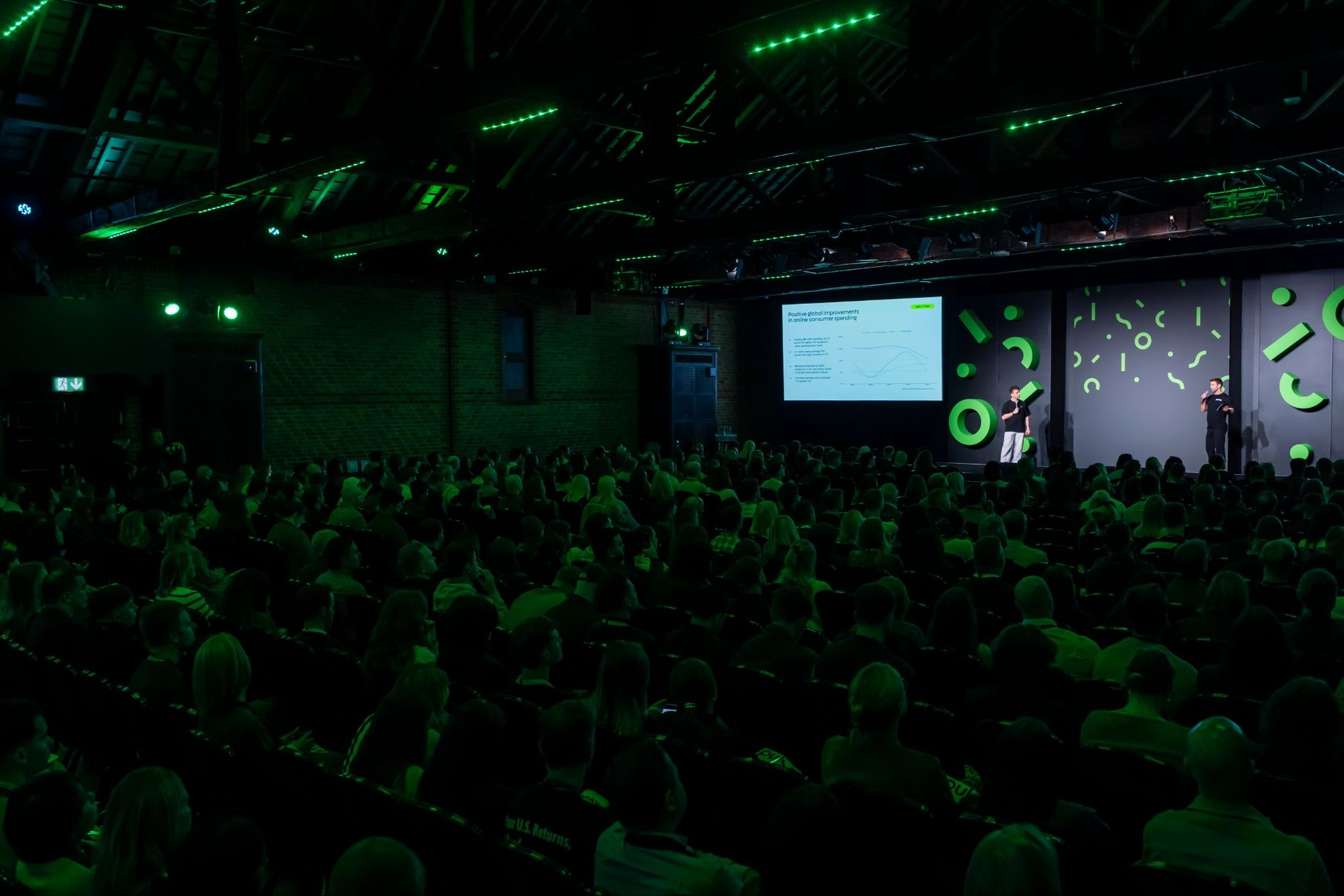
Last week, London-based ecommerce consultancy and paid media agency Vervaunt hosted the fifth London edition of the Pulse Ecommerce Summit at The Brewery.
The event, which took place on Wednesday 13 and Thursday 14 May, saw more than 2,000 people from across the ecommerce industry gather for two days of valuable networking, engaging talks and plenty of partying.
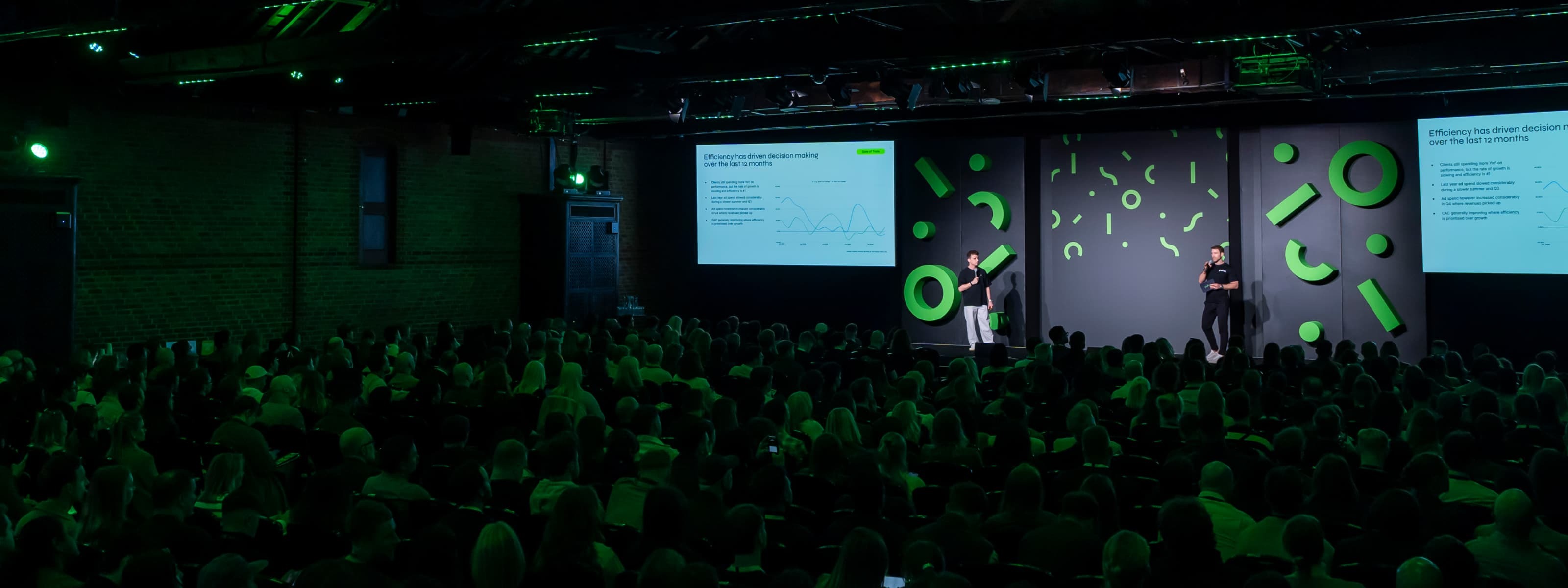
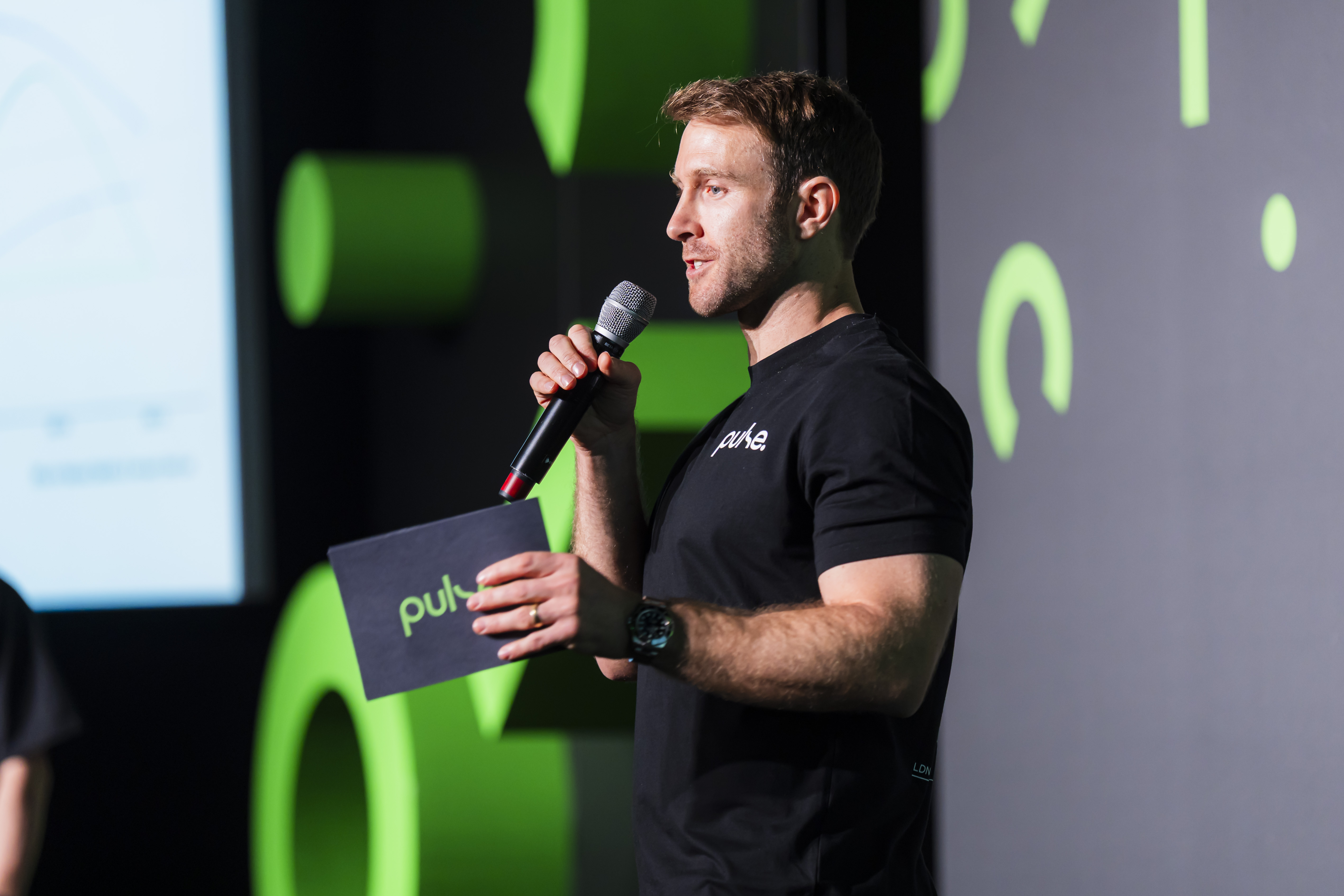
The opening statements on day one at Pulse
As well as a host of panel discussions and workshops – including one featuring By Association Only’s very own Strategic Director, George Linton and another with our Head of Sales, Andrew Mackenzie, for the first time Pulse Ecommerce Awards were given for various categories.
By Association Only won the Innovative Feature Pulse Ecommerce Awards
We are delighted to have won in the Innovative Feature category for our work on Astrid & Miyu's story chain builder! Check it out here.
The Pulse Ecommerce Awards recognise excellence across experience, creativity, innovation and technology in modern ecommerce and are judged by leading brands and experts.
The Innovative Feature category celebrates a standout feature that materially improves the ecommerce experience, so we're delighted to have won.
To celebrate, the event closed with a Y2K party with entertainment provided by none other than Gareth Gates and Blazin' Squad.
Blazin' Squad entertaining the crowds at the official Pulse after party
Gareth Gates
A huge thank you to Vervaunt for inviting By Association Only to sponsor the event yet again, and for putting on such an inspiring few days. And a huge shout-out to our fellow sponsors.
The talks
Here are standout takeaways from some of the talks and panel discussions:
Both days boasted exciting agendas
Wednesday
Opening Statements and the State of Commerce & Media
Paul Rogers, Josh Duggan and Joshua Hobson from Vervaunt
Based on Vervaunt’s research…
Overall, consumer spending is in a really good position – Q4 last year saw the highest YOY growth since Covid
On average, Vervaunt’s clients are growing by 15 per cent compared to 30 per cent the year before
There is a focus on growing efficiently
Paid remains the number one focus for growth and also the most performant channel
Influencer spend is increasing due to broader value and deeper relationships
On average, organic is trending downwards
Email is also trending downwards for the first time (from a revenue perspective)
SMS and WhatsApp are growing
LLM referrals and ShopMy are the only two emerging channels
All brands struggled for traffic in Q1, but Q2 is looking better
The Nordics have seen some really positive growth this year”
On media trends…
Meta and Google have seen considerable growth despite a continued focus on lessening spend and reliance on the platforms
Meta ad spend in Q1 grew 33 per cent in Q1 2026
Google ad spend grew 19 per cent in Q1 2026
Expect the search experience to evolve rapidly – Google to call local businesses for you, product details, bookings, virtual try on, etc
Predicts “Buy on Google” will be a big factor in what will drive agentic commerce in the future
Search referrals are beginning to decline in line with zero click growth
Meta relying heavily on AI for growth – aims to offer fully automated AI campaign management in 2026
Fashion Strategy in 2026: Brand, Performance & Scale
Moderated by Shamoli Miah from Vervaunt, featuring Jake Messer from bound and UNIK:Clothing, Lynda Carnal Theard from Dr Marten's and Ian Mackey from Percival
On channels…
Jake Messer from bound said the brand found unexpected success through TikTok
Lynda Carnal Theard from Dr Marten's said that “Fashion trends are starting on social media, so you need to be on it. One of the biggest opportunities, though, is cross-channels. It’s important to be consistent across all touch points.”
On growth…
Messer says, “Stabilisation for the US is what we want. We want to monitor and maintain it… we still want to grow there but it’s a lot more difficult since the introduction of tariffs.”
Ian Mackey from Percival says, “Last year we suffered a lot with the tariffs given that the US is such a big part of our business. A single state approach is working better for us (New York). It’s easier for wholesale, proximity to the UK and other reasons.”
Carnal Theard says, “Euope is multiple markets – each is different so it’s important to balance being local, whilst staying true to the brand. We have aligned visual guidelines globally but using a specific approach for each market does work better.”
On collaborations…
Mackey says, “Percival is refining its strategy to do collaborations where we will see mutual growth. Collaborations are a lot of work so we need to yield long-term customers.”
Carnal Theard says, “Dr Marten's have done lots of collaborations – it’s part of our DNA. We want to focus on collaborations that resonate and make sense from a cultural level and brand perspective. Less is more, and we want to amplify them as much as we can.”
On stores…
Messer says, “bound has just taken the keys to a nine month pop-up concept store, where we will host live events and more.”
Carnal Theard says, “Dr Marten's just opened an immersive store on Brewer Street in Soho, London. It’s about delivering an experience – it’s not just about transactions. You can repair your shoes in this new store, there is a coffee shop, we host parties… it’s a community space more than just a store. I think it’s really important for brands.”
Amy Allen from Selfridges
What Does Returns Excellence Look Like in 2026 for Boden and Selfridges?
Moderated by Al Gerrie from ZigZag, featuring Richard Lim from Retail Economics, Colin Dawes from Boden and Amy Allen from Selfridges
The six pillars of returns excellence:
1) Ease
2) Cost (returns fees remain highly sensitive)
3) Communication
4) Choice
5) Speed
6) Sustainability
On ease, cost and communication
Al Gerrie from ZigZag says, Charging customers for returns has become the norm but, but there is a tolerance for what they are willing to pay.”
£2.50-3.00 is a good amount to charge for returns, according to Lim – £3.50 for home collection
Amy Allen from Selfridges says, “We intend to offer as much flexibility as possible. There is a strong link between seamless, convenient returns and loyalty. In our returns portal we can test different options and see what our customers want, and which options lead to loyal customers.”
Colin Dawes from Boden says, “Ease is so important – we are D2C, so people try on their clothes at home and are more likely to return them than say a Selfridges customer who has visited a changing room. So we have to offer choices for ease”
Different return experiences are key – free returns for account holders or loyal customers, or refunding immediately for loyal repeat customers for example
On speed of refund…
Research shows four to five days is a safe zone, six to nine days customers become frustrated, nine days plus is the danger zone
Selfridges refunds within four days on average. “The sooner the customer gets a refund, the more likely they are to return to us again. We also want to make the process as easy as possible, with as few clicks as possible, automatically filling in customer details, etc. We also try to process the returned stock within 12 hours of it being returned, then put it back into a prime spot for resale,” says Allen.
Dawes from Boden says, “We sit within the two to three days, making sure the refund is processed as quickly as possible.”
On cost of refund…
Boden is “solidly not going to charge its customers for returns,” says Dawes. “We are an online retailer so want to make the process as easy as possible for the customer.”
Returns at Selfridges are currently free, “but profit is really important,” says Allen. “Our AOV is suffering at the moment, so it is being tabled and reviewed.”
On the future of returns…
Allen says that “AI would potentially improve the returns process. Will the customer be able to utilise it to return straight to the brand, for example? Can graders be replaced by AI? It would make the process quicker and cheaper.”
An exciting panel discussion featuring our Head of Sales Andrew Mackenzie
The Future of Commerce: The Perspectives of Market-Leading Agencies
Moderated by Shamoli Miah from Vervaunt, featuring Ed Bull from Limesharp, Martijn Wijsmuller from Ask Phill, Lewis Sellers from IDHL, Anton Johansson from Grebban and Andrew Mackenzie from By Association Only
On roadmaps…
Sellers from IDHL says, “Web-stack consolidation has been a huge thing over the last few years. We’re also seeing a shift towards short-term thinking versus long-term thinking due to the economic changes”
“Consolidation,” says Mackenzie from By Association Only. “The simplicity of platforms such as Shopify is hugely appealing for a lot of brands.”
Johansson from Grebban agreed. “Get rid of the old shit and simplify. And if you’re not doing it, your competitor is.”
“Redesign with creativity at the core, says Bull from Limesharp. “Brands want to really stand out, using animations, etc. Also, loyalty has become even more important – offering premium services at a subscription level, for example.”
On mistakes brands make when hiring an agency…
“Trusting the process is best,” says Johansson. “If you hire an agency to design your website, let them design your website.”
On bringing tech in-house…
“The hybrid model is the happy medium,” says Mackenzie. “You get a fresh viewpoint from an agency and a different lens, which is really important for the brand. The relationship you have with your agency is critical.”
A lot of Limesharp’s brands have big in-house tech teams, says Bull, which “completely changes the role of the agency. For those brands, we more so come in to inspire the brand and discuss with them what their competitors are doing.”
On what clients are wasting the most money on…
“Bureaucracy… we have AI now, use it.”
On things brands have done that have the biggest short-term impact…
“Ship from store”, Bull
“Consolidating store fronts down to one or two,” says Mackenzie
James Gurd, Mark Oldham and Ellie Lansley
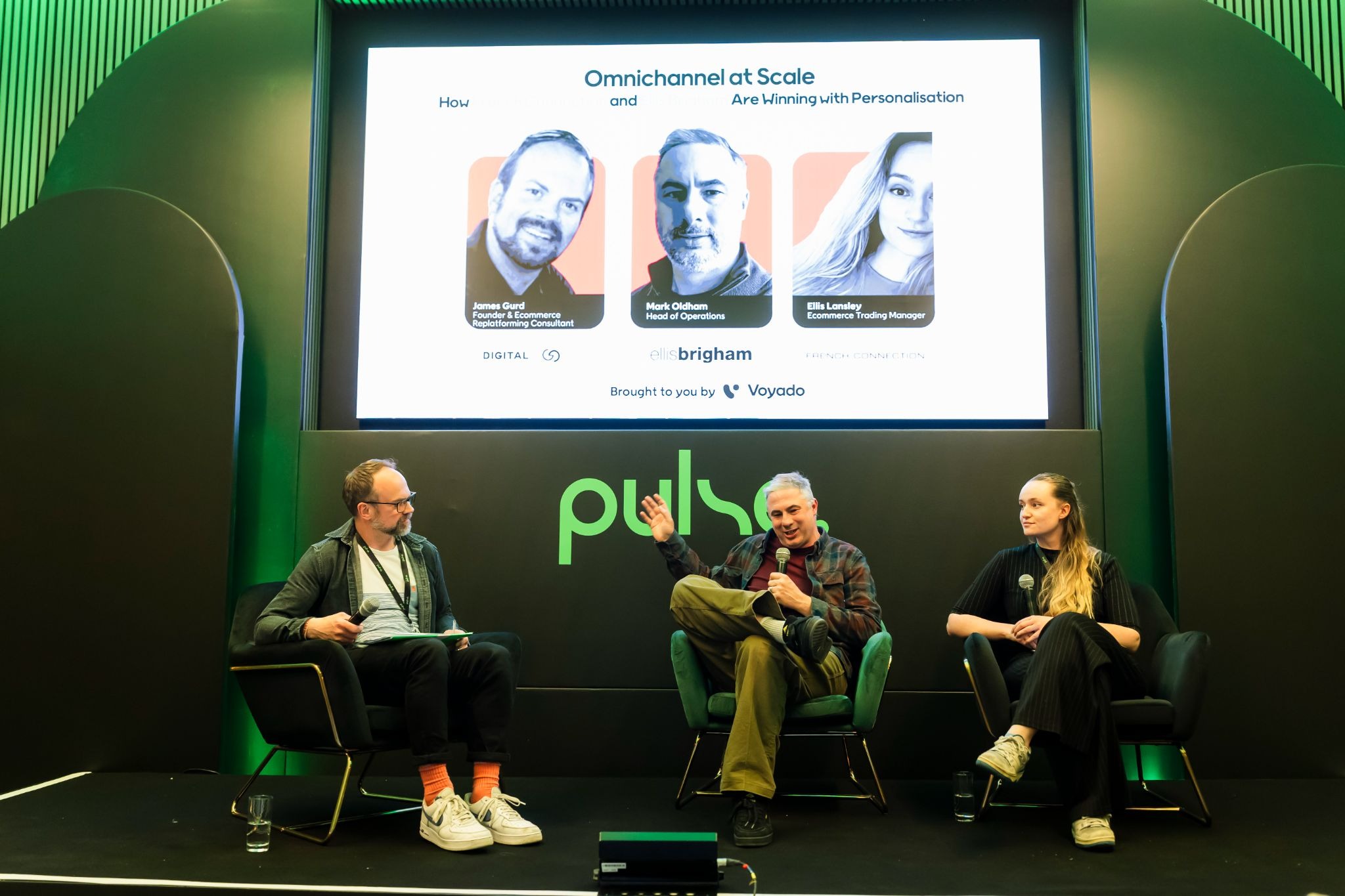
Omnichannel at Scale: How French Connection and Ellis Brigham Are Winning with Personalisation
Moderated by James Gurd from Digital Juggler & Inside Commerce, featuring Ellie Lansley from French Connection and Mark Oldham from Ellis Brigham
On blending in-store expertise and digital journeys…
“Sharing staff expertise in the digital space is really hard,” says Oldham. “It’s really easy to isolate products and not show your full wares, compared to the experience you have in store with everything on show.”
“We try not to second-guess what the customer wants, giving them information before you push them into a funnel. We use information from staff at source to feed into our website PDPs. We also use our staff for fit guides, how-tos and other guides.”
At French Connection, the brand tries to get everyone in the same room from across our different teams, to work out who their customer is and what they want. They also organise store visits for the head office team.
Try before you buy has also been big for French Connection – customers can try on at home before they buy or order products that aren’t in stock in-store to their homes.
On personalisation using AI…
Ellis Brigham, has run a lot of A/B tests where they were sure of what the answer would be, but got it completely wrong.
Automation has been good for gathering data, then changing the brand’s content to reflect how its customers are shopping.
“You need to take a step back and ask, 'How will this benefit the customer?’” says Oldham
On what their definition of personalisation in an omnichannel world would be…
French Connections sees, “customers as individuals, so we need to make sure that their entire journey is personal – and remember that in every single department.”
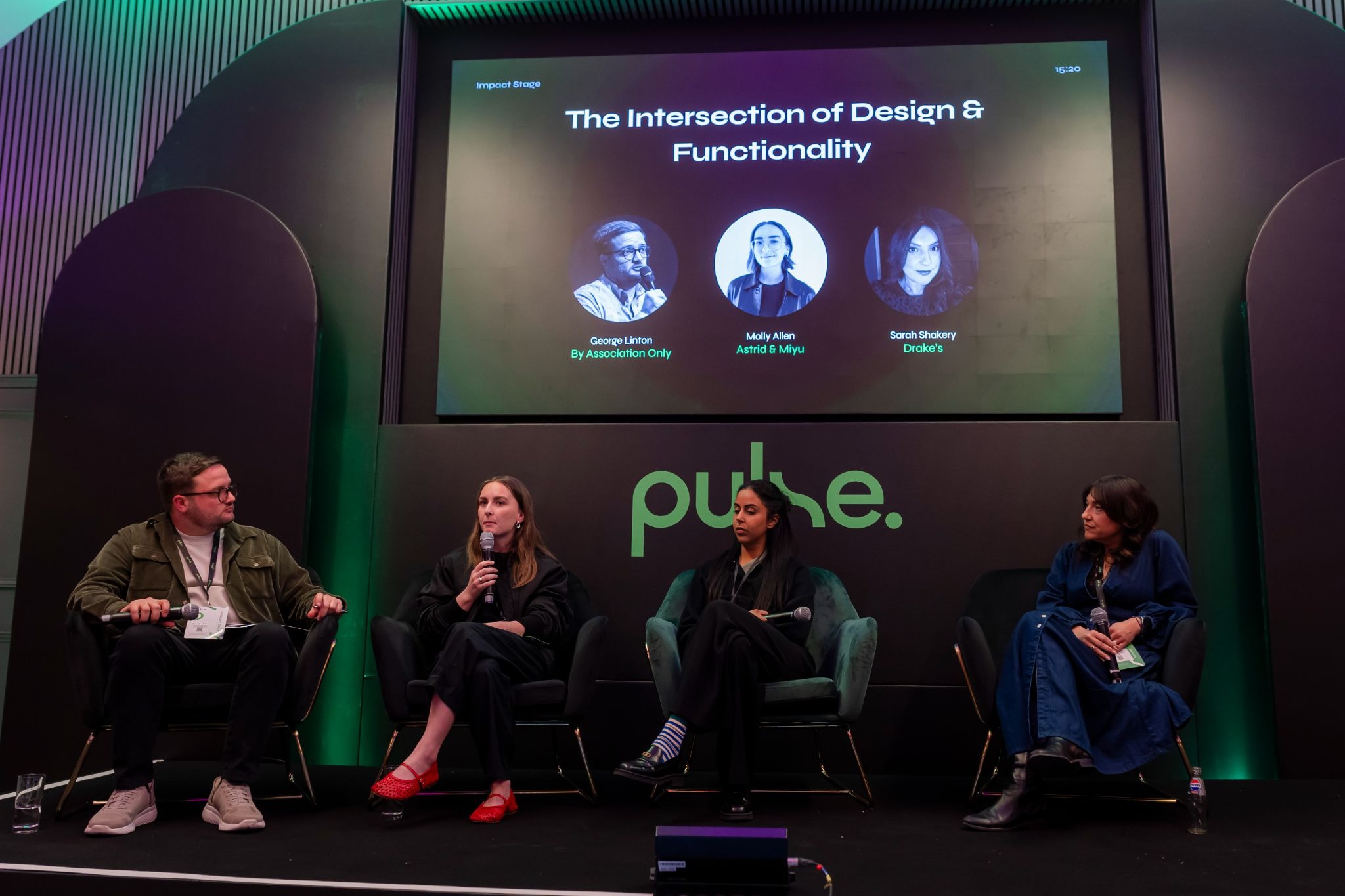
George Linton, Mollen Allen, Kavita Kumar and Sarah Shakery
The Intersection of Design & Functionality – moderated by BAO
Moderated by George Linton from By Association Only, featuring Sarah Shakery from Drake's, Molly Allen from Astrid & Miyu and Kavita Kumar from Orlebar Brown
When asked for a feature on site that blends great design and functionality…
Shakery highlighted Drake’s “Editorial content – our journals are really successful, our emails, and also our Instagram content.”
Allen from Astrid & Miyu discussed the brand’s bespoke visualiser – which also won a Pulse Award! She says it brings the brand experience online, whilst being very commercially successful
When asked how brands are measuring the success of their content…
“It’s of course about brand, and longevity,” says Shakery. “Drake’s will introduce some A/B testing soon to really listen to the customer and put them at the heart of everything we’re doing.”
“A/B testing is great, especially for founder-led businesses where decisions can be very emotion-led. It gives tangible results you can share – it removes emotion and opinion, it’s fact.”
Allen agrees that “A/B testing is great, it’s been a game changer for Astrid & Miyu. You can get too granular though where you look at the data too much and as a consequence lose the brand. So for us we’re pulling back slightly and letting the brand lead a little more again.”
“At Orlebar Brown we have a character we call Sonny, which underpins our design philosophy and everything that we do,” says Kumar. “This is a man who can go from the board room to the beach seamlessly, so we take that into account for everything we do. Ultimately what we’re selling is a feeling – we’re playing into how you want to feel when you’re on holiday.”
Drakes has a person who leads on tone of voice for the brand across every single touch point, including post-purchase – same with imagery.
“The commercial will come if you’re really consistent with that messaging,” says Shakery
“Sometimes you can do things in ecom because it’s trendy and what other brands are doing, but you have to be authentic and stay true to your brand,” she adds
Linton agrees saying, “If you have the customer at the front of mind you can’t go far wrong. And you get to be playful.”
On how much emphasis there is on brand versus commercial:
Orlebar Brown’s CEO describes brand and commercial as tectonic plates – “when the two meet that’s when greatness happens. We can have amazing videos on site but we need to talk to the tech team first to make sure it doesn’t slow the site down, for example.”
All agrees, “It’s about working in synergy together. If you focus on commercial too much you might see the short term gain but longer term you might impact retention, and vice versa.”
When asked for advice for blending design and functionality…
Shakery suggests involving the right stakeholders early on, so everyone is on the same page
Chris Ormonde, Kimberley Correia, Claire Hennah and Tom Broughton
Entering and Scaling the US: Strategy, Execution & Reality
Moderated by Chris Ormonde from Whanau Advisory, featuring Claire Hennah from Grown Alchemist, Tom Broughton from Cubitts and Kimberley Correia Hunt from Timex Group
Broughton says that that US trade is ‘very up and down’ and difficult to forecast. It is often reflective of what is going on in the the US and there is so much uncertainty, so Cubitts is reluctant to invest
However he also says that “The US is quite forgiving – it rewards the brave if you get it right”
General consensus that US customers are prepared to spend more compared to in the UK
Broughton says there are huge cultural difference and behviour patterns when compared to the UK. People in the US are more cut-throat – more transactional
US customers are more likely to ask what the best sellers are, rather than choose what they prefer for themselves
US customers are more drawn to success – real or perceived. You need to project the view of being successful
Cubitts are focussing on New York for now – the US is so big that it’s been more important to focus on geography versus channel
Overall advice from the panel includes: don’t scale too fast, get localision right, customer service and responsiveness are key, you need to plan very far in advance if considering retail
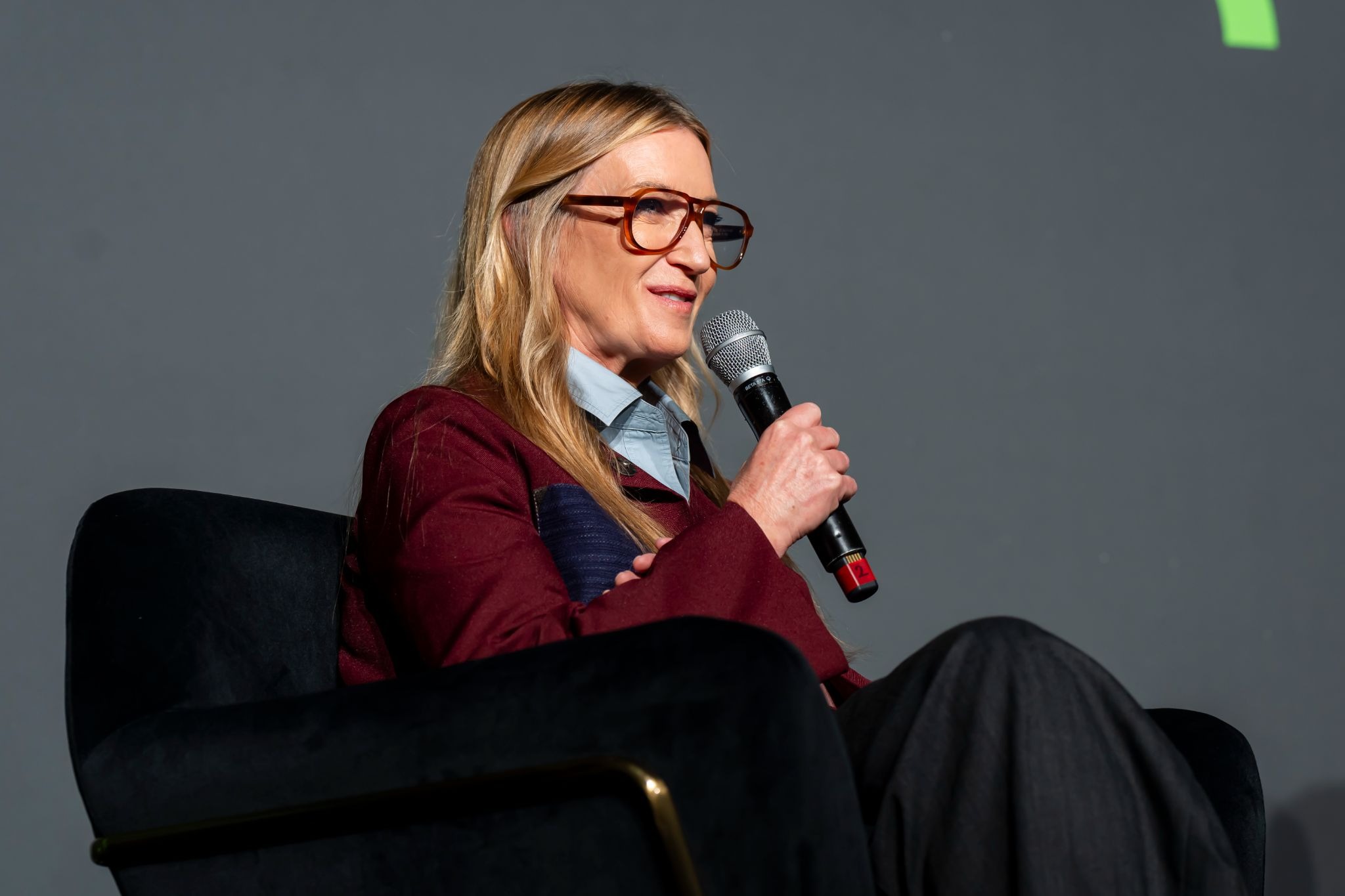
Dame Anya Hindmarch
An Interview with Dame Anya Hindmarch
Moderated by Ed Bull from Limesharp, featuring Dame Anya Hindmarch
On creativity…
“Creativity is part nature and part nurture”, says Hindmarch
“You also need to be quite disciplined and feed your brain – I travel a lot, go to exhibitions, etc. I also bank my ideas in quite an organised way.”
“Creativity is tough and hurts sometimes, but it’s important not to give up. Sit with it.”
“I start with what is exciting me, and that translates into something commercial,” says the founder. “If you start with the commercials, the creative can become quite diluted.”
“Commercitality doesn’t kill creativity; the two can work really well together.”
“Conviction is very important in any creative endeavour.”
On the Anya Cafe in Chelsea…
“If retail is to exist in a digital world, there needs to be a reason to visit. Digital is so exciting, so what’s the point of retail?”
“You need to hire really, really good people and I do. I think of it like putting together a dinner – are these people you’d like to spend Sunday lunch with?”
A Recap of the Major Trends: Closing Statements
Featuring Shamoli Miah and Bethan Rainford from Vervaunt
Key takeaways from day one…
The significance of brand building
“Those brands which have been most successful so far this year are the ones that are the most disciplined.”
“The winners over the next twelve months will be those building better brand experiences”
“Measurement remains one of the industry’s biggest challenges. There is so much data today – how do we bring it all together?”
“The challenge for 2026 is how we take all the data we have and translate it into actionable next steps”
Josh Duggan
Thursday
Opening Statements and the State of Commerce & Media:
Paul Rogers, Josh Duggan and Joshua Hobson from Vervaunt
Based on Vervaunt’s research…
70 per cent of ecommerce directors are investing in onsite experience this year
This was specific to more personalised experiences at the bottom of the funnel and retention practices
For top-of-funnel, we are seeing brand-led pages become more popular – introducing the brand at the top half of the page, with the latter half of the page becoming more catalogue-like
There are tailored experiences for different parts of the funnel
On paid media…
Vervaunt has noticed a trend of using tech such as DEMA to look at LTV on a category level, to be dynamic on your allowable costs of advertising at a category level
This is an interesting point for businesses with a large and varied catalogue, where AOV can fluctuate
Also seeing a rising trend within retention of loyalty, becoming more integrated and convenient for the customer, for example, digital Apple wallet loyalty cards
Economics of Scale: Capital, Commerce & the P&L with ex-Gymshark CEO & Investor, Steve Hewitt
Moderated by Paul Rogers from Vervaunt, featuring Steve Hewitt from Whanau Advisory
According to Hewitt, margin at the launch of a business is key – gross margin is crucial
He advises not getting an investor too early, as this can lead to seller’s remorse
The investor says that the best time to seek investment is halfway through your plan for growth
Do not sell for the money, as it’s “underwhelming” – “entitlement is an ugly situation to encounter”
It’s important to introduce an investor who has expertise in areas where you do not
Choose someone with“Grit, no ego and treat them with dignity”
Hewitt recommends giving investors good news early on and bad news even earlier – tell them what isn’t working and what you’re doing to resolve it
Invest in retail and viral moments through storytelling as well as paid marketing
Building an AI-Optimised Brand: How to Get Your Product Data Agent Ready with Axel Arigato
Moderated by Lauren Muir from Pion333rs, featuring Ian Earnshaw from Axel Arigato and Chris Kilin from Glara
General points from the talk…
Agentic feels more real and less targeted than paid ads on Google or even socials
Agents are a reality who will read your website and represent you elsewhere
Paid has become a dependency, and costs are so high compared to customer spend, which is squeezing margins
A customer will go through six touch points before buying on a traditional sales journey. Using AI, this is surfaced earlier in a compact, authoritative and informed interaction
Agents are ultimately assistants, so it’s the brand’s role to brief them
ChatGPT has 900 million weekly users
Google has a billion weekly users
One out of seven interactions is commerce-related
55 per cent of users use AI for product discovery
Those users research before they arrive on site, meaning they have a higher intent to purchase
Users who come from LLMs spend longer on site and spend 30 per cent more than normal customers
Brand-level visibility is important; product visibility is more important
Brands that know themselves, their purpose and what they stand for will be most successful as they can identify their value and product in detail
About Vervaunt
Vervaunt is a London-based ecommerce consultancy and paid media agency, working alongside ambitious ecommerce brands and retailers to improve key areas of their business and drive growth.
About By Association Only
By Association Only is the Platinum Shopify Plus agency for the world’s most design-conscious luxury brands. Get in touch to discover how our team of experts can support your brand’s Shopify ambitions
Photography by @charlieburgioph
Recent articles you may also like
16 luxury and premium brands that migrated to Shopify
From luxury fashion to premium eyewear and jewellery, we look at 16 brands that have moved to Shopify.
Drapers' Wonderful Websites series boasts By Association Only merchants
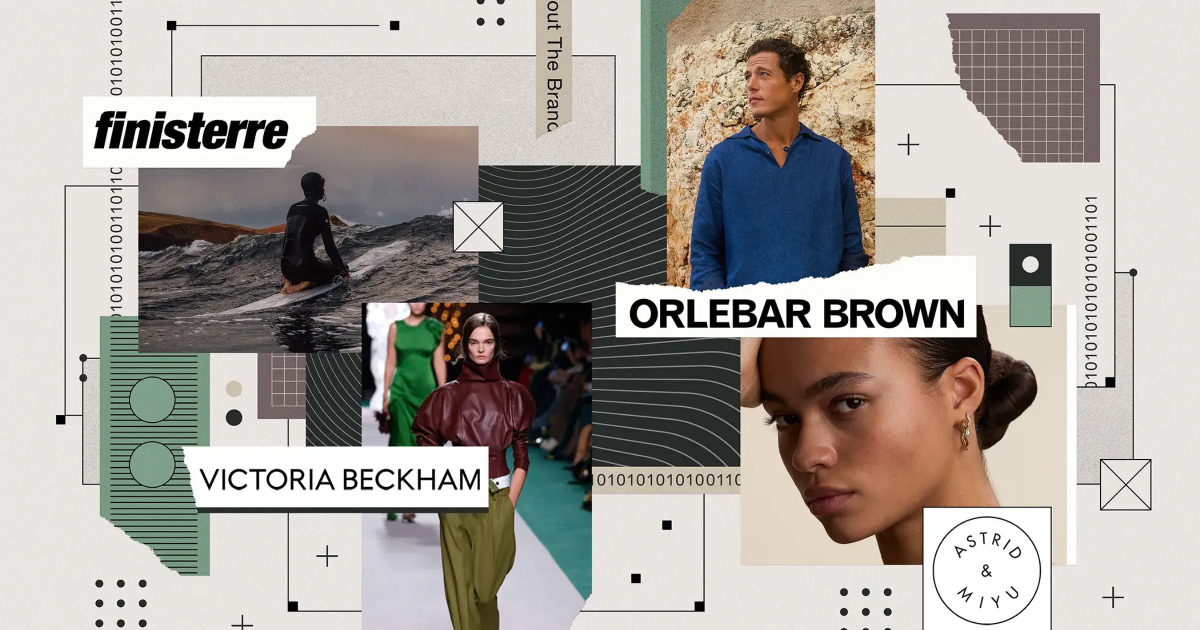
We're delighted to have been featured in fashion retail publication Drapers' Wonderful Websites series, including for our work with Astrid & Miyu, Victoria Beckham, and Orlebar Brown. Read all about it here.











.jpg)