

Why Renaissance? Because, as Shopify President Harley Finkelstein puts it, "We're living in a renaissance of entrepreneurship. AI is rewriting what's possible at lightning speed."
According to Shopify's announcement, we're experiencing a transformative moment in commerce that rivals 14th-century Florence. "Tools don't create masterpieces. People do," they declare. "Michelangelo's chisel was simply a conduit for his vision and da Vinci changed the world with no more than ink and a notebook."
Today's entrepreneurs build upon this creative legacy with modern tools that multiply the impact of their ideas while preserving their unique perspectives. This edition positions AI as the modern chisel that amplifies human creativity rather than replaces it.
The shift is fundamental, from "assisted commerce" to "agentic commerce" where AI doesn't just help you work, it actively collaborates with you, anticipates your needs, and even executes tasks on your behalf.
In this article, we select and break down the most transformative updates for brands and retailers and examine how they might revolutionise your brand and business.
Since 2022, Shopify has been releasing major updates under the Shopify Editions banner. Previous editions focused on everything from expanding consumer reach (Connect to Consumer) to unifying infrastructure (Unified) to smoothing rough edges (The Boring Edition).
Now, The RenAIssance Edition transforms how merchants build, design, and grow with a raft of new features and a focus on AI-powered tools that amplify creative vision.
For design-conscious brands working at the intersection of commerce and craft, certain updates stand head and shoulders above the rest.
This week at BAO, we reviewed and explored the exciting new Editions features as a team to understand where the latest updates could really push our merchants to that next level. We can now share an overview with you that concisely summarises each of these and highlights potential key benefits that we’re exploring and testing for our clients.
Sidekick is Shopify’s AI assistant, built directly into the admin. It acts as an embedded teammate that understands the store’s data, catalogue and performance history, so it can respond with context rather than generic AI answers. It’s now been enhanced to support merchants by:
SimGym is Shopify’s new AI-powered simulation tool that predicts how customers are likely to behave when a merchant makes changes to their store. It allows us to test ideas before they go live, from layout adjustments to content changes to wider structural updates.
Right now, a big part of our work relies on experience, best practice, competitor analysis and data. SimGym adds a new layer of intelligence we can explore for our clients.
We can:
This exciting advancement is likely to shape how we collectively appraise and test updates and features we introduce for our clients. Simulations can provoke questions and adjustments prior to fully A/B testing, adding a layer of foresight.
Shopify Agentic Storefronts is providing brands with the tools they need to deliver a sophisticated and on-brand experience within external AI chats, essentially amplifying wider product discoverability for Shopify merchants.
The release of Agentic Storefronts means that brands can “build seamless embedded commerce experiences quickly.” Crucially however, that experience is also controlled, with this release providing brands with the ability to “decide exactly where and how your brand shows up from discovery to post-purchase”’
“This is a really exciting update for us here at BAO and even more so for our clients. External AI adoption is accelerating at pace and its crucial brands can capitalise on this whilst maintaining brand experience. Agentic Storefronts will help brands to achieve this directly in platform using tools such as the Knowledge Base app to control the experience, whilst also ensuring data visibility by tagging orders with Instant Checkout sales channels, delivering on “end to end agentic commerce”. There are a few outstanding questions as to how Agentic Storefronts will handle complex products, order management and returns, but this update is certainly a big leap forward.”
The recent increase from 100 to 2,048 variants opens the door for a fundamental shift in how products can be architected on Shopify.
For brands with large catalogues and complex size or colour matrices, the old variant limit forced “split products” where a single style had to be broken across multiple product records. This added engineering stitching, ERP complications and fragmented SEO signals.
With the new limit and updated Product APIs, those constraints fall away. High-SKU styles can now sit within one unified product, removing the need for custom stitching, reducing middleware complexity and bringing SEO back to a single, authoritative location.
“This shift lets us retire a lot of the workarounds that split products forced on brands. Engineering becomes cleaner, ERPs map naturally, and SEO strategies no longer need to juggle fragmented product families. It gives high-SKU clients a far more robust and scalable foundation.”
A small update with considerable value for luxury and clienteling focused brands. Hidden products allow for VIP releases, private drops, bespoke product access and early previews for key customers.
Products are published but kept out of all storefront surfaces, meaning they’re not visible in navigation, search, collections or recommendations, and can only be accessed via direct URL.
This gives brands control without unnecessary complexity, creating a straightforward way to run strategic, invitation-only moments while keeping the main catalogue tight. It supports a more exclusive approach to product drops and audience hierarchy without adding operational weight.
Brands can now schedule theme updates and run A/B tests directly in the admin. This supports safer experimentation and helps teams iterate with intention.
For BAO this strengthens our CRO and optimisation workflows, particularly for lower-complexity tests and controlled rollouts. We’ll be evaluating how native A/B testing compares with more sophisticated third-party tools that many of our clients currently use, and where each approach makes most sense.
“Being able to schedule and time theme updates will be a huge benefit to merchandising teams especially those managing international stores during an important promotion."
We’ll be closely watching the roll out of native A/B testing, something that every single brand is keen to implement if they haven’t already and until now we’ve had to do via a third party tool. The best A/B testing tools make light work for busy e-commerce teams by sending notifications when a test needs attention and showing key data in a quick to digest format. If these can be achieved natively it should result in happier e-commerce and development teams that can move faster and make their stores even more relevant for customers.”
Reinforcing its ambition to be the leading omnichannel commerce platform, Shopify has continued to invest in improving the day-to-day operational foundations. This winter’s updates place a strong emphasis on reliability, efficiency and scalability, including making POS more robust than ever. Key highlights include:
“In conversations with brands operating physical retail locations this year, we have encountered instances where wireless connections have been disrupted causing POS hubs to have issues. The introduction of wired connectivity and Shopify’s most powerful POS processor to date will be a welcome change for store teams, particularly during peak trading periods. Reducing friction in-store is ultimately about faster checkouts and eliminating queues, and this release makes that possible. This POS update, along with the others, offers tangible improvements for in store teams”
Shopify has strengthened its checkout with updates that focus on personalisation, trust and market-specific control. These changes give merchants more flexibility at the point of purchase and support higher conversion across regions. Key updates include:
"We’re always excited to see checkout updates have been included within Editions here at BAO. Shopify’s baseline checkout experience is pretty solid, but the latest updates add layers of personalisation which will really drive conversions. One update we are particularly looking forward to testing is the ability to adapt checkout and customer accounts pages per market. Building on the ability to adapt other areas of a theme, making the checkout and accounts pages market dependent allows us to have a fully customised journey, providing an elevated brand experience that drives conversions.”
The RenAIssance Edition is not about spectacle. It is about considered and targeted progress.
A platform strengthening its foundations so brands can think more creatively, act more decisively and create more confidently. This approach Shopify is embracing, aligns closely with our philosophy here at BAO, one that prioritises autonomy, agility and informed decision making for our clients.
For the luxury and progressive pedigree of brand and retailer that we support this is an encouraging step forward as we proactively experiment with how AI, new functionality and an increasing range of tools can be harnessed to great effect.
As we proactively learn more about the updates and their benefits we will of course update you if you are a current BAO client. If you’re new to BAO and would like to explore how we can serve you with Shopify’s latest features then please drop us an email or send a message through our enquiries form and we’ll get in touch.
For ongoing updates sign up for our newsletter to get news directly into your inbox.
By Association Only is the Platinum Shopify Plus agency for the world’s most design-conscious luxury brands. Get in touch to discover how our team of experts can support your brand’s Shopify ambitions.

From luxury fashion to premium eyewear and jewellery, we look at 16 brands that have moved to Shopify.

From agentic commerce and AI discovery to smarter merchandising and a more flexible Shopify stack, here’s what stood out from two days at DotDev 2026.
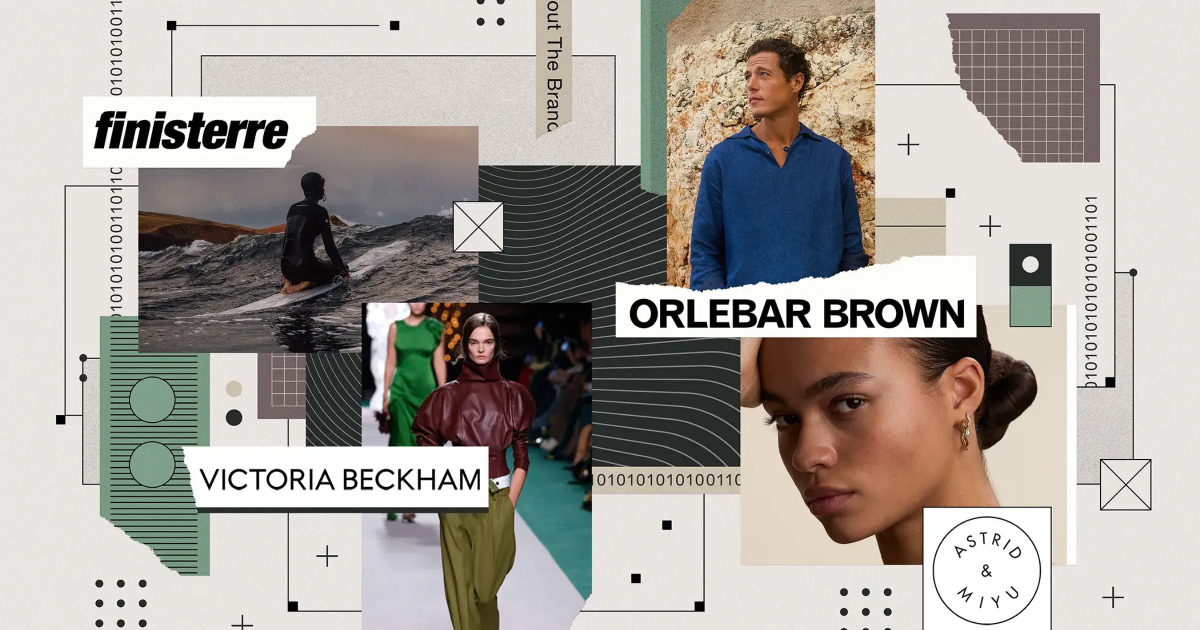
We're delighted to have been featured in fashion retail publication Drapers' Wonderful Websites series, including for our work with Astrid & Miyu, Victoria Beckham, and Orlebar Brown. Read all about it here.


.jpg)