

Shopify just released its latest round of updates under the name Exponential, with new features spanning AI, online, merchandising, retail, marketing, operations and more.
Why Exponential? Because this Edition focuses on the network effect of Shopify’s ecosystem and what the platform describes as “non-linear growth”.
With more than one billion products available to be discovered across AI channels and more than 400 million shoppers with Shop Pay accounts, Shopify is increasingly connecting its merchants, customers, products and data across the wider commerce ecosystem.
As Shopify President Harley Finkelstein explained when introducing the Edition:
“Everything we launch becomes the foundation for what comes next.”
That idea runs throughout Fall ’26: capabilities introduced in previous Editions are becoming more connected, more sophisticated and, increasingly, more useful to merchants.
In this article, we break down some of the most exciting updates for brands and retailers and explore how they could benefit your business.
Since 2022, Shopify has been releasing its major product updates under the Shopify Editions banner.
Previous Editions have focused on everything from expanding consumer reach and strengthening Shopify’s foundations to unifying its infrastructure and, most recently, using AI to amplify creativity and entrepreneurship.
Fall ’26, Exponential, builds on this progress by focusing on the growing connections between Shopify’s merchants, customers, products and technology.
Other highlights:
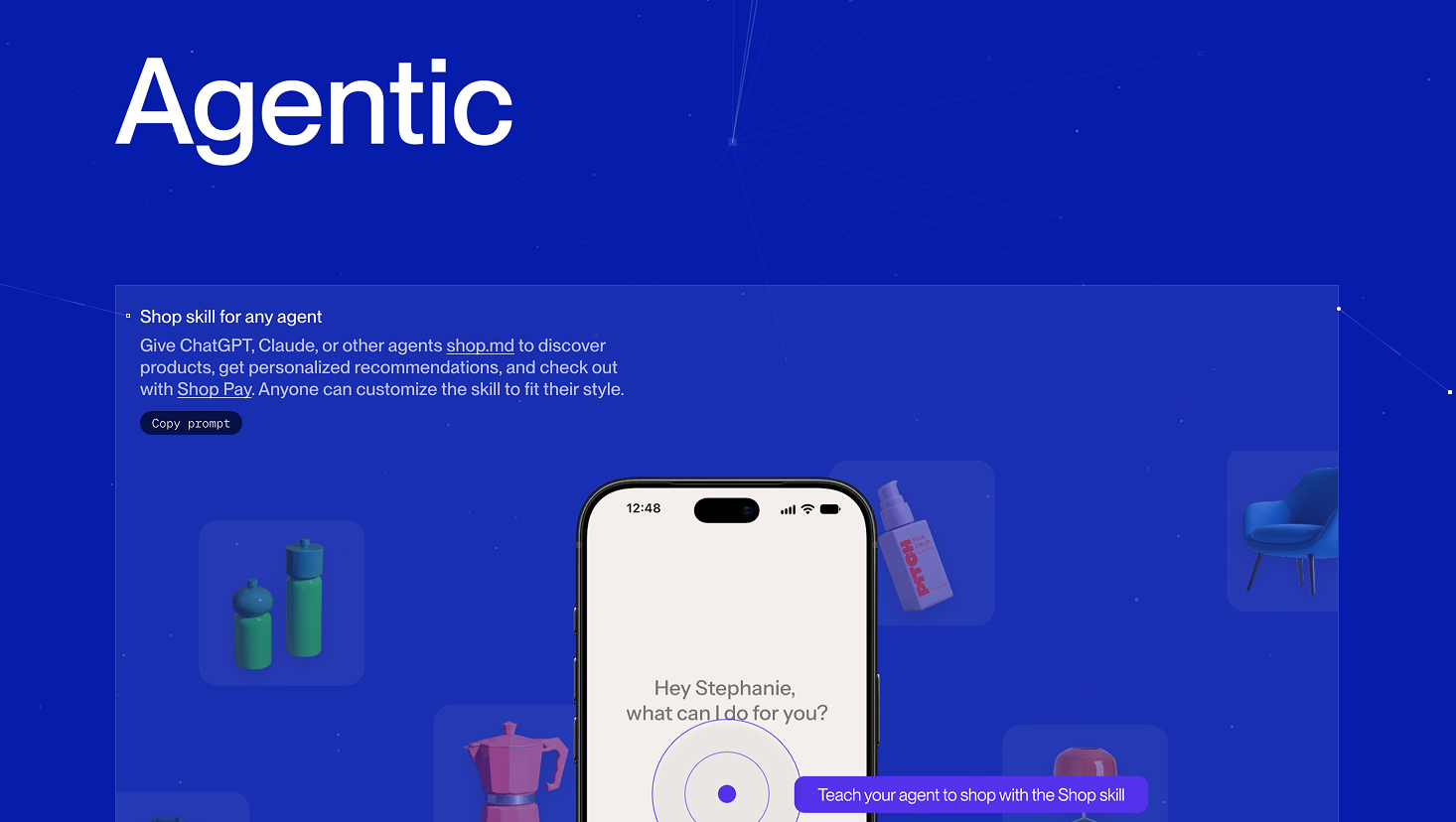
Shopify has introduced a Shop skill that allows AI agents to discover products from Shopify Catalog, make personalised recommendations and check out using Shop Pay.
This opens another route to product discovery, allowing customers to shop across Shopify’s network without necessarily beginning their journey on an individual brand’s website.
Shop Pay is expanding into personal AI agents, allowing customers to discover products, approve purchases and complete checkout within supported AI experiences.
For Shopify, the ambition is for its commerce infrastructure to work regardless of which AI environment a merchant or customer chooses to use.
As Finkelstein put it:
“Shopify connects to all of them.”
With hundreds of millions of Shop Pay accounts, this gives Shopify merchants the potential to reach existing customers in an entirely new environment.
Customers will be able to buy products through Google Search, including AI Mode, and the Gemini app, with checkout powered by Shopify and orders continuing to be managed within the Shopify admin.
For merchants, this brings Shopify products closer to customers at the point of AI-assisted discovery.
Merchants can review and approve the business information shared with AI shopping agents, including policies, FAQs and other important details.
As AI increasingly becomes part of the product discovery journey, having greater control over how agents understand and communicate information about a brand could become increasingly important.
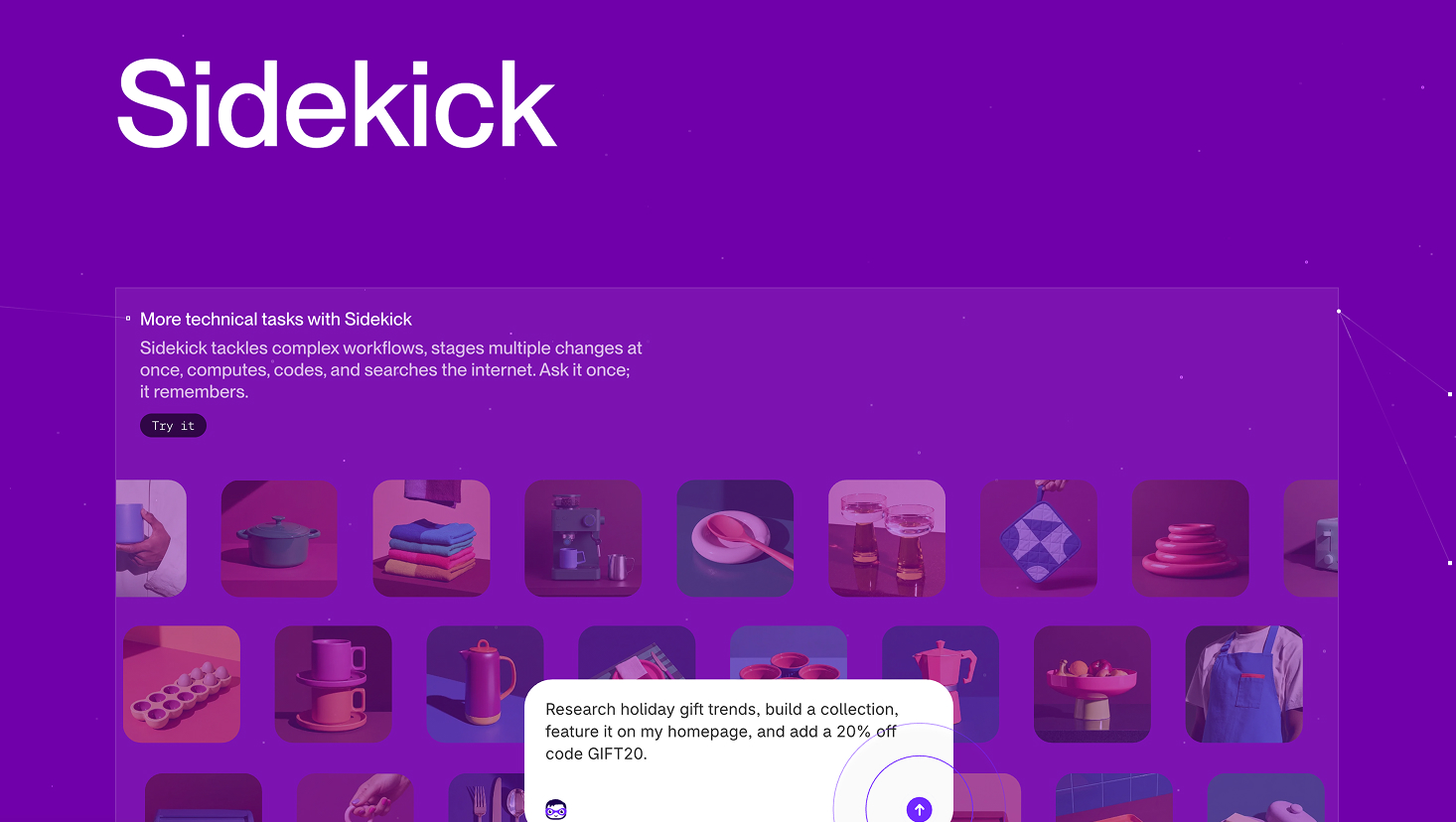
Shopify continues to expand Sidekick beyond simple AI assistance.
Sidekick can now tackle more complex workflows, carry out calculations, write code and conduct web research. Merchants can also ask it to plan a series of changes, approve them once and allow Sidekick to carry out multiple actions.
Sidekick can identify potential improvements to a store and test them using SimGym before merchants decide whether to apply the changes.
This creates a more direct connection between identifying an opportunity, testing its potential impact and implementing it.
Sidekick is also becoming more deeply integrated throughout the admin, including within the checkout and accounts editor and Checkout Blocks.
It can provide product pricing recommendations, help investigate payments and chargebacks, create and edit draft orders and make bulk changes across products.
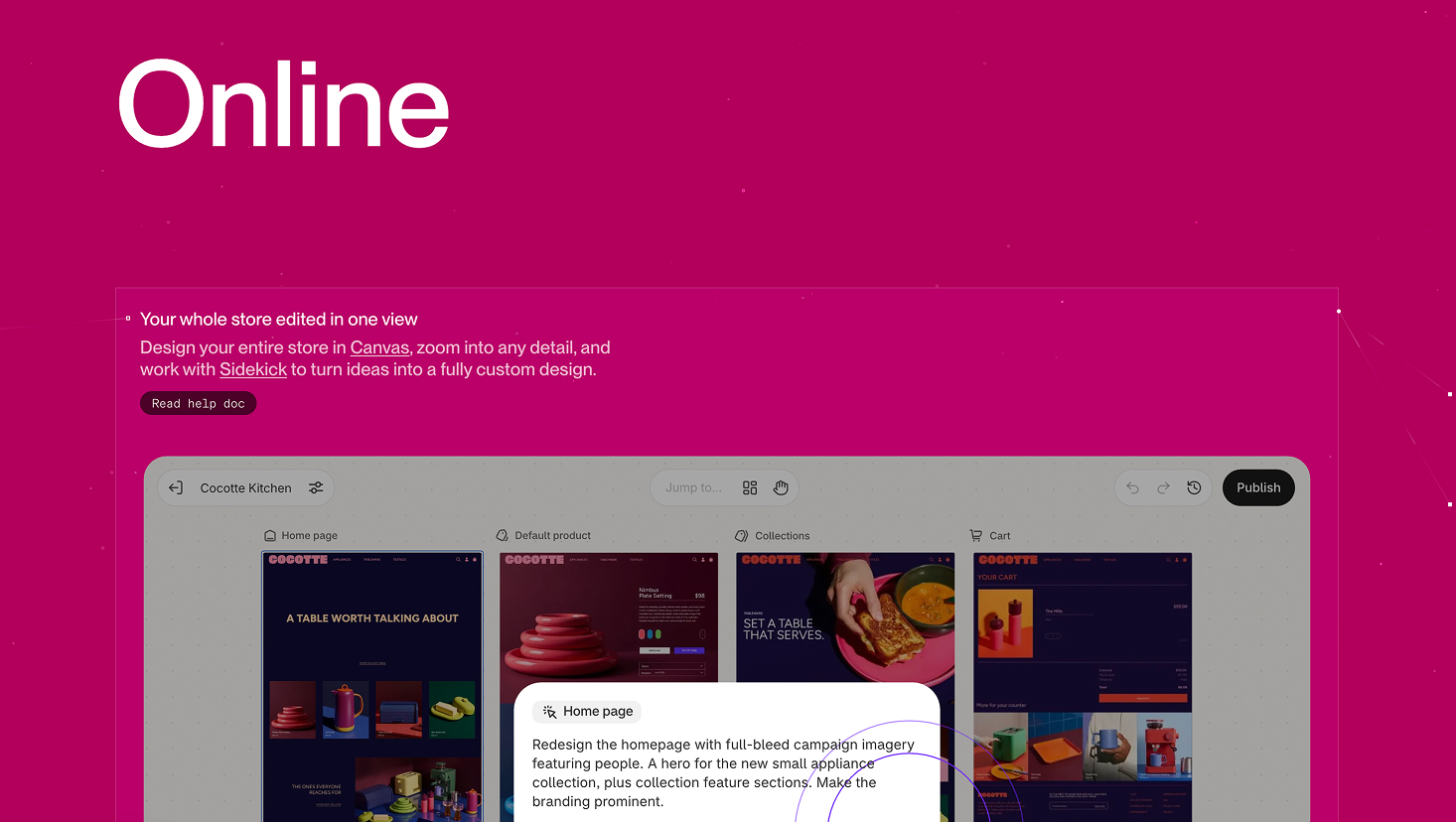
Canvas introduces a new way to design Shopify stores by allowing merchants to see and edit an entire store within one visual environment.
Users can move between pages, zoom into individual details and work with Sidekick to create and edit designs while remaining within the theme’s design system.
Canvas is currently in early access.
Finkelstein has since shared that more than 2,500 Canvas stores are already live, describing the principle behind the feature simply:
“The store you can picture is the store you can build.”
For brands, the development could make it easier to manage and evolve an online store while retaining a more holistic view of the experience.
Shopify has improved predictive search and product suggestions, helping customers find relevant products while they type.
According to Shopify, the changes have increased add-to-carts from search by eight per cent.
Brands can now coordinate themes, checkout configurations, catalogues and discounts within a single rollout.
This means launches, promotional events and experiments can be prepared and scheduled as one coordinated change rather than managed individually across different parts of the store.
Scheduled changes and A/B tests can now extend beyond the online store to surfaces including headless builds, Shopify POS, Google Shopping and the Shop app.
Brands can also schedule changes to product publishing and pricing across different markets and automatically roll them back when a promotion ends.
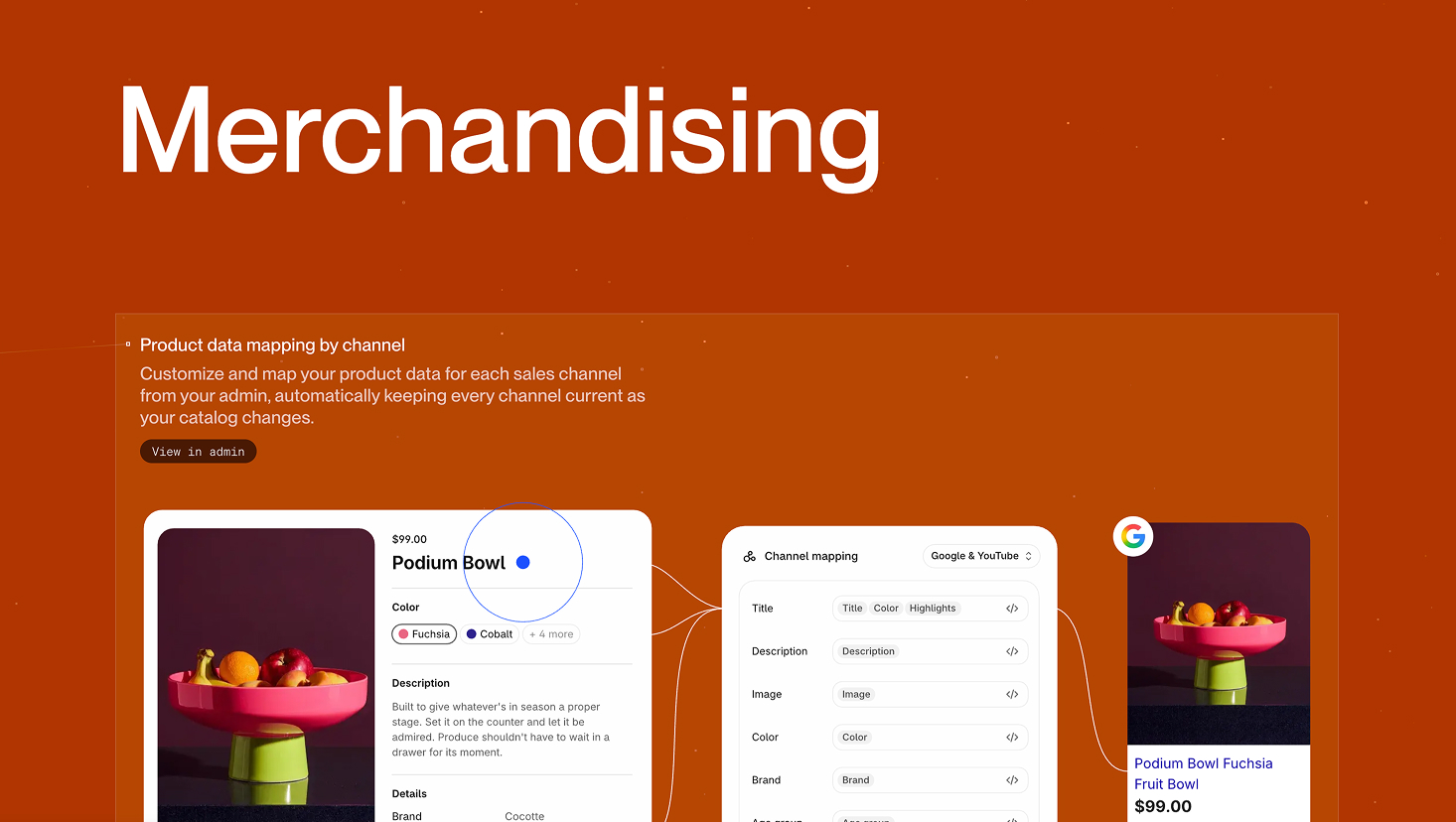
Merchants can customise and map product data for individual sales channels directly from the Shopify admin, with information kept up to date as the main catalogue changes.
As customers increasingly discover products through marketplaces, apps, social platforms and AI channels, this provides more control over how product information is presented in different environments.
Collections can now combine products, variants and app-driven sources within a single collection.
They can also be created using Sidekick and reused elsewhere, providing greater flexibility for complex merchandising requirements.
Product and variant information can now be managed together on the product page, with bulk controls and a clearer layout designed to simplify management of products with multiple variants.
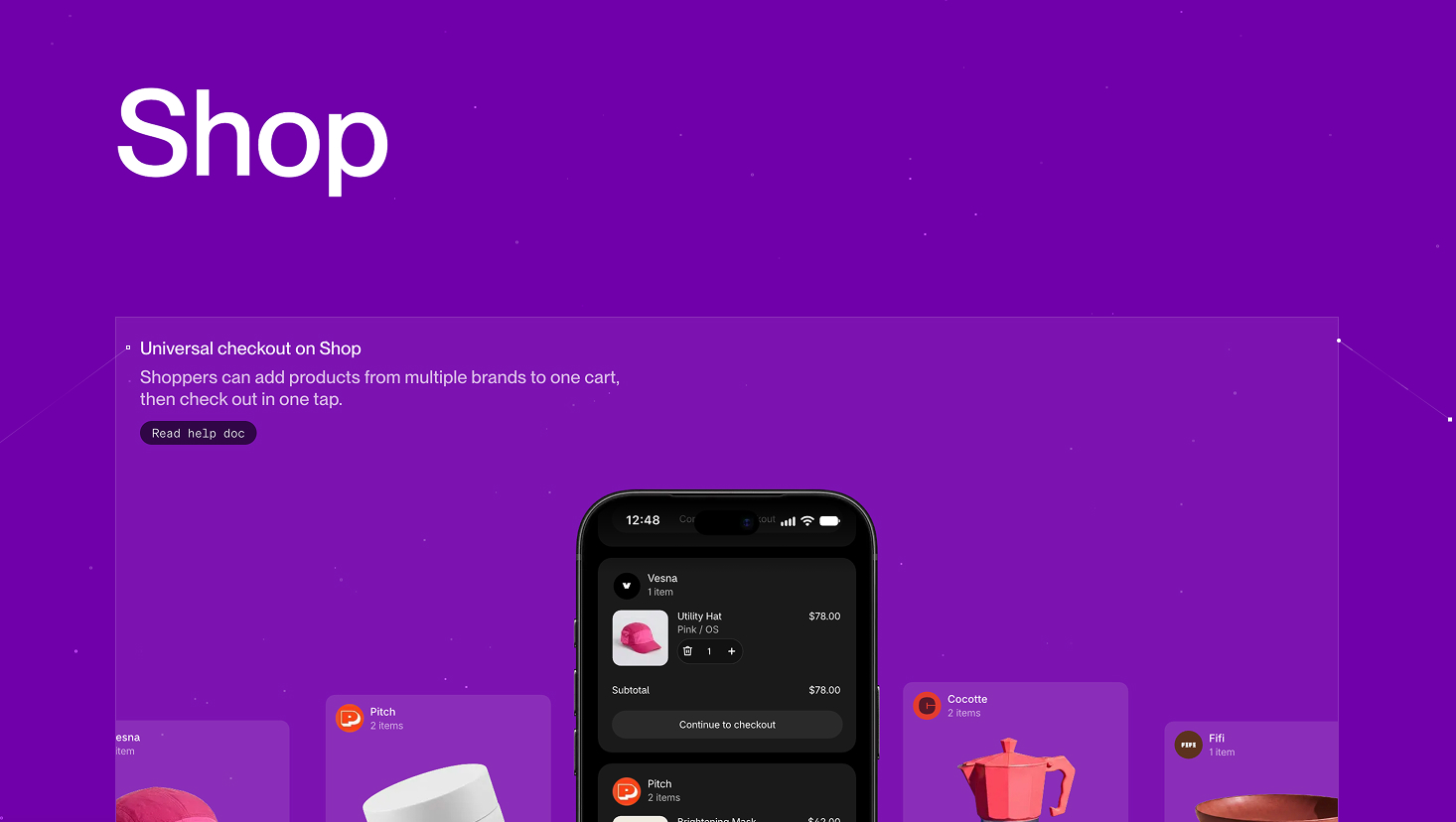
Customers using Shop can now add products from multiple brands to a single cart and complete the purchase in one checkout.
Finkelstein summarised the proposition as:
“One cart. One checkout. Across brands on the Shop app.”
For merchants, each transaction and customer relationship remains with the individual brand, while products can form part of a broader multi-brand shopping journey.
Shop.com has been redesigned to offer a more immersive shopping experience, including curated content, personalised discovery and more detailed order tracking.
Search in Shop is also becoming more personalised, with signed-in customers seeing results informed by their browsing and purchase history.
Brands can connect Instagram to Shop and automatically sync reels, images and carousels into shoppable content.
This allows existing social content to become another product discovery surface without teams having to recreate it specifically for Shop.
Customers with Shop accounts can now have their carts synced across devices and visits.
Carts can also move between Shop and a brand’s online store, allowing customers to continue shopping without rebuilding their basket.
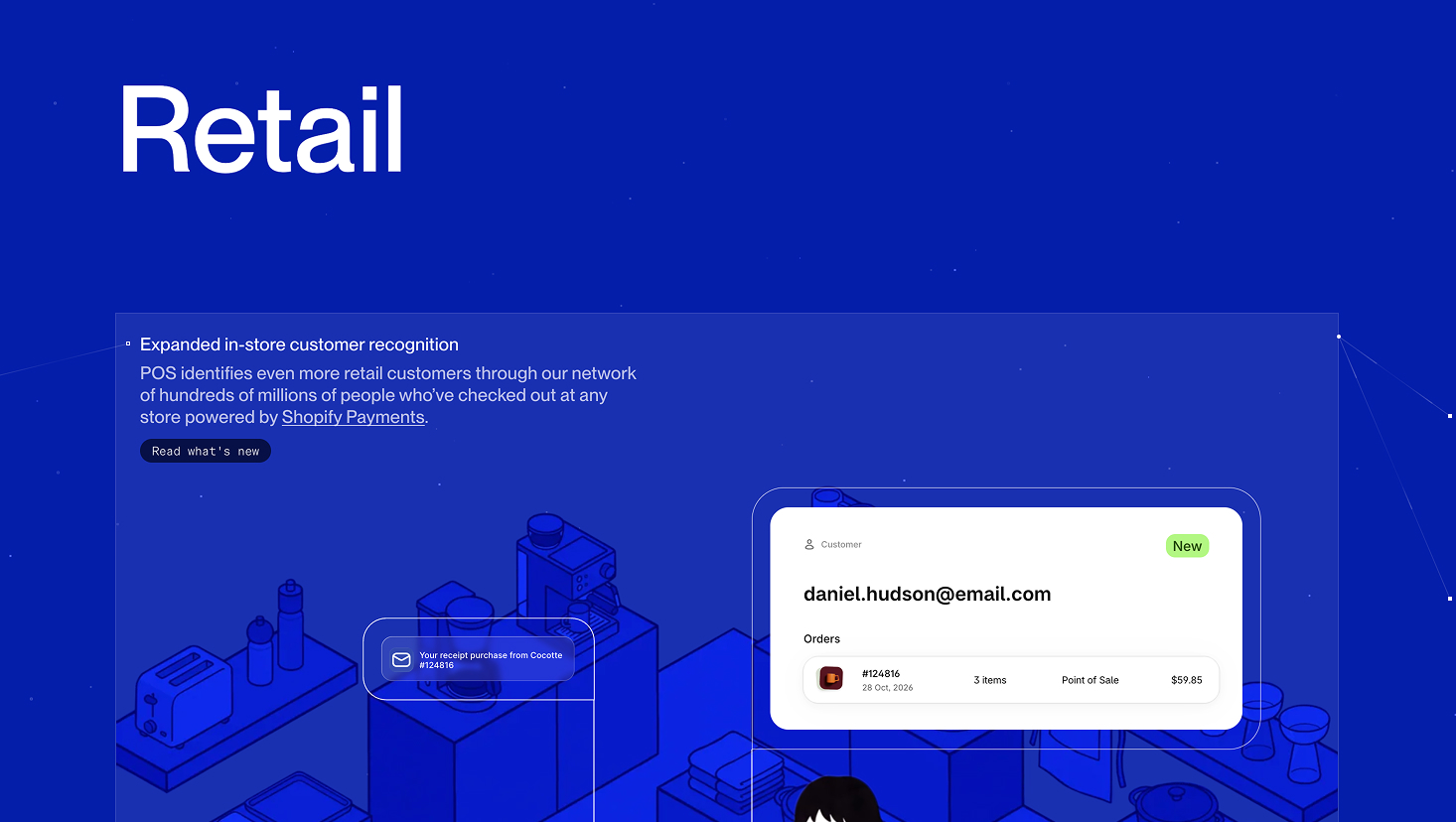
Shopify POS can identify more retail customers using Shopify’s wider network of shoppers.
For Finkelstein, this addresses a longstanding issue within physical retail: customers often arrive in store effectively as strangers to the technology serving them. With Shopify’s latest changes, customer recognition can increasingly connect an in-store transaction with an existing customer relationship.
For brands, this creates the potential for more informed and connected service across physical and digital retail.
Authorised retail staff can access a known customer’s abandoned online cart through Shopify POS and complete the purchase with them in store.
This creates a much closer connection between online browsing and physical retail, particularly useful for brands where customers frequently research products online before visiting a store.
Retail teams can search Shopify POS across products, orders, customers, collections and draft orders, while checkout has also been streamlined with fewer taps for cash and split payments and faster receipt flows.
Shopify is also introducing native stock counts, allowing retailers to schedule and carry out inventory counts directly within Shopify and review adjustments before updating stock levels.
Brands can now collect WhatsApp marketing consent during checkout.
Shopify Messaging can then use this consent to power automated communications around browsing, abandoned carts and abandoned checkouts.
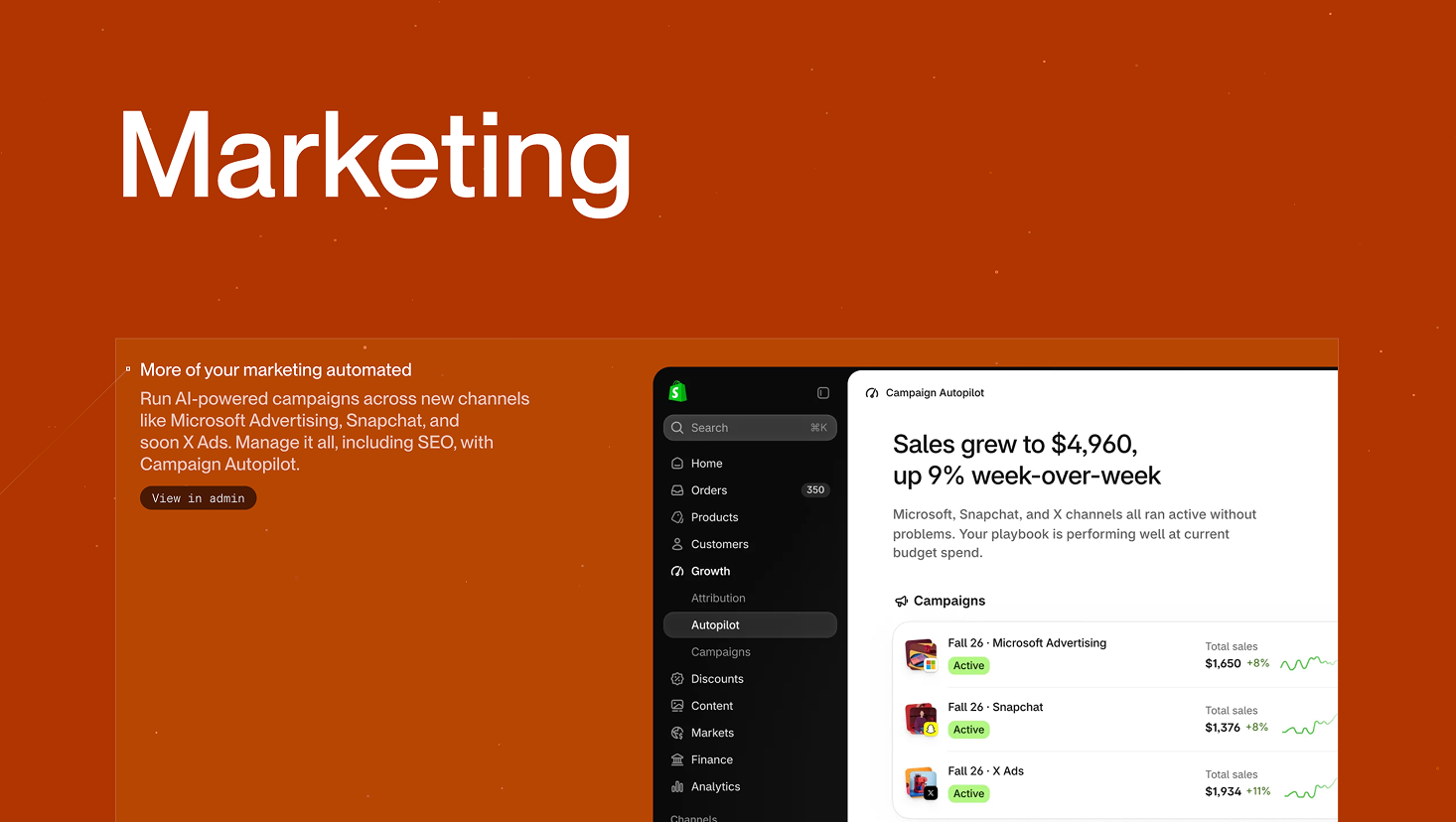
Shopify’s AI-powered Campaign Autopilot is expanding across more marketing channels and now includes support for SEO.
Merchants set their budget and approve activity before it goes live, while Shopify uses its wider network data to help automate campaign activity.
Marketing performance can now be viewed through unified reports within Shopify Analytics, bringing data from different marketing channels together in one place.
Shop Campaigns is expanding into more than 35 additional markets, giving more merchants access to Shopify’s customer acquisition tools.
Shopify Analytics can increasingly be organised around attributes that are particularly useful for fashion, luxury and lifestyle brands.
Category metafields such as colour, material and pattern can be used as analytics dimensions, while linked data such as designer or loyalty status can also become available for analysis.
Annotations can be added to analytics to provide context around changes in performance, making it easier to connect peaks or drops with launches, campaigns and other business activity.
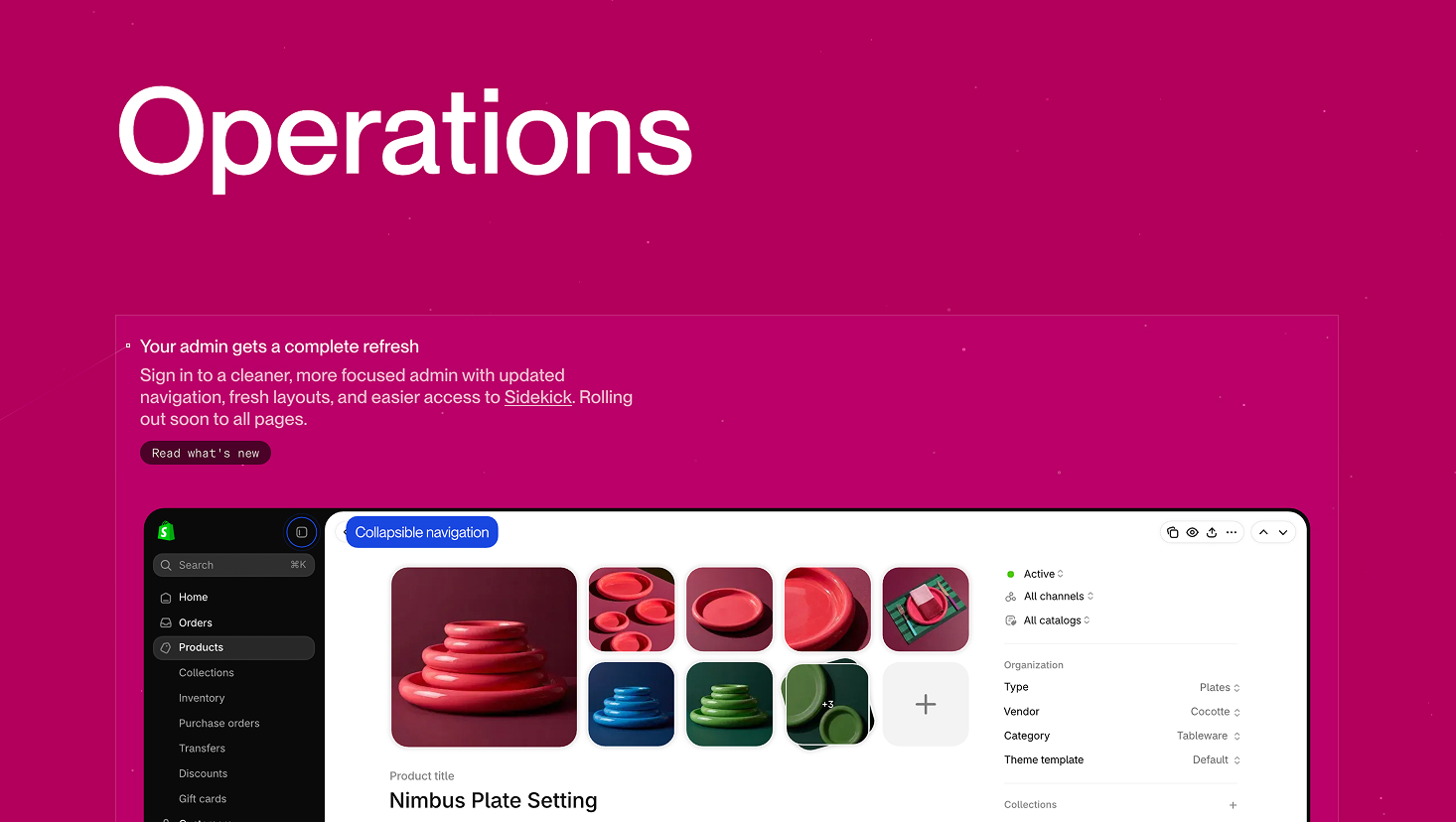
The Shopify admin is receiving a significant visual refresh, with updated navigation, cleaner layouts and easier access to Sidekick.
The new experience is rolling out soon across all pages.
Also coming soon, Shopify will introduce a filterable log showing changes made across a store and identifying the staff member, app or service responsible.
For larger ecommerce teams, this should make it significantly easier to understand what has changed, when and by whom.
Shopify is introducing a new theme architecture that allows pages to be composed in Liquid using blocks, typed contracts and partial updates.
The architecture has also been designed to work more effectively with AI agents, including markdown files that can communicate how a theme is built and preserve design preferences.
Shopify will now deliver only the CSS required for each individual page rather than unnecessary styling, helping online stores load faster.
Hydrogen has also been rebuilt to work across different frameworks and runtimes, giving development teams greater flexibility when building headless Shopify experiences.
Fall ’26 is another substantial update, but the theme running through Exponential is less about individual features and more about how Shopify’s ecosystem increasingly works together.
AI agents can discover and sell Shopify products, Shop Pay can follow customers into new buying environments, online and offline journeys are becoming more connected, and tools such as Canvas, Sidekick and Rollouts are changing how ecommerce teams manage and develop their stores.
Or, as Finkelstein describes the wider advantage behind Exponential, it is the result of “millions of merchants” and “hundreds of millions of shoppers” compounding across Shopify’s network.
For brands and retailers, there is plenty to explore – and these are, of course, just some of the highlights.
As many of the features announced within Editions are still in early access, coming soon or rolling out, their availability will vary. As we learn more about the updates and how they can benefit your business, we will of course keep you updated.
To explore the full Fall ’26 Edition, visit Shopify Editions.
By Association Only is the Shopify Plus agency for the world’s most design-conscious luxury brands. Get in touch to discover how our team of experts can support your brand’s Shopify ambitions.

From luxury fashion to premium eyewear and jewellery, we look at 16 brands that have moved to Shopify.

From agentic commerce and AI discovery to smarter merchandising and a more flexible Shopify stack, here’s what stood out from two days at DotDev 2026.
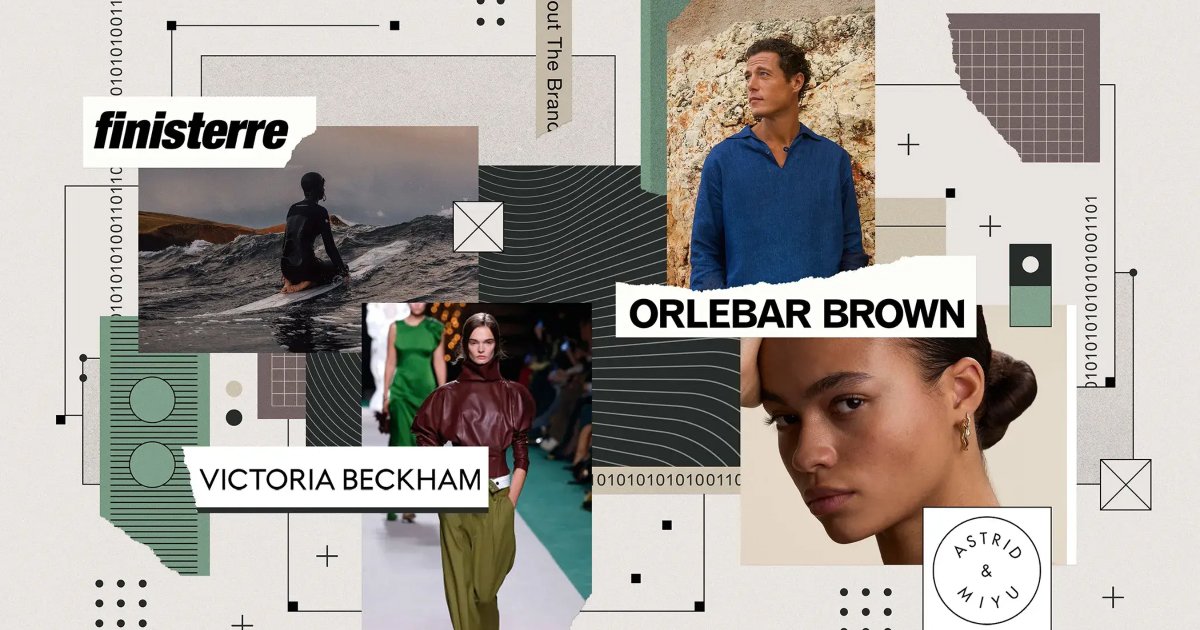
We're delighted to have been featured in fashion retail publication Drapers' Wonderful Websites series, including for our work with Astrid & Miyu, Victoria Beckham, and Orlebar Brown. Read all about it here.


